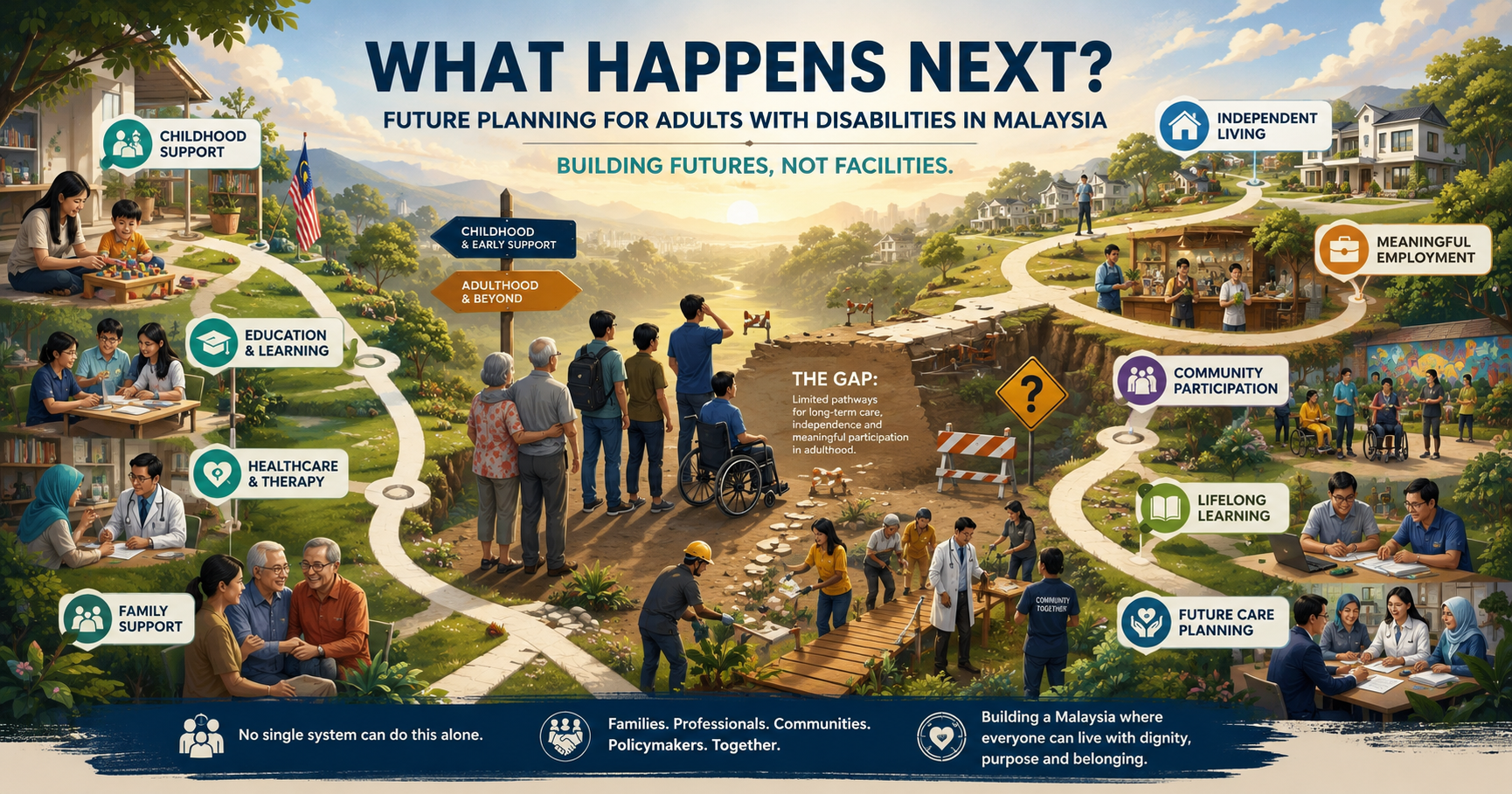
A recent case shared publicly by a Member of Parliament has brought attention to a challenge that many families quietly live with every day.
The case involves three middle-aged brothers with disabilities who depended entirely on their elderly mother for care and support. Following her passing, urgent questions arose regarding their future care arrangements, placement, support, and long-term wellbeing.
While the circumstances are unique to one family, the questions raised are not.
Across Malaysia, many parents and caregivers wonder:
- What happens when I am no longer able to provide care?
- What happens if I become ill?
- Who will support my child when I am gone?
- What options exist for adults who require ongoing support?
- How can families prepare before a crisis occurs?
These questions become even more complex when individuals require different levels of support, involve multiple agencies, or fall between existing service categories.
At Autism Resource Malaysia (ARM), we believe these conversations are essential.
Malaysia has made significant progress in autism awareness, intervention services, and educational support. However, adulthood remains one of the least developed areas of long-term support.
Future planning is not only about housing.
It is not only about financial planning.
It is not only about care facilities.
It is about creating sustainable pathways that allow autistic and neurodivergent individuals to continue living with dignity, purpose, belonging, and meaningful participation throughout adulthood.
No single organisation can solve this challenge alone.
Meaningful solutions require collaboration between families, communities, professionals, service providers, policymakers, and government agencies.
The case highlighted this week reminds us that future planning cannot begin only when a crisis occurs.
It must begin long before it becomes urgent.
We extend our condolences to the family involved and hope that sustainable solutions can be found for all those affected.
More importantly, we hope this story encourages a broader national conversation about adulthood, long-term support, and the future of disability care in Malaysia.
Original article: [Howard Lee 李存孝]
Comments are closed